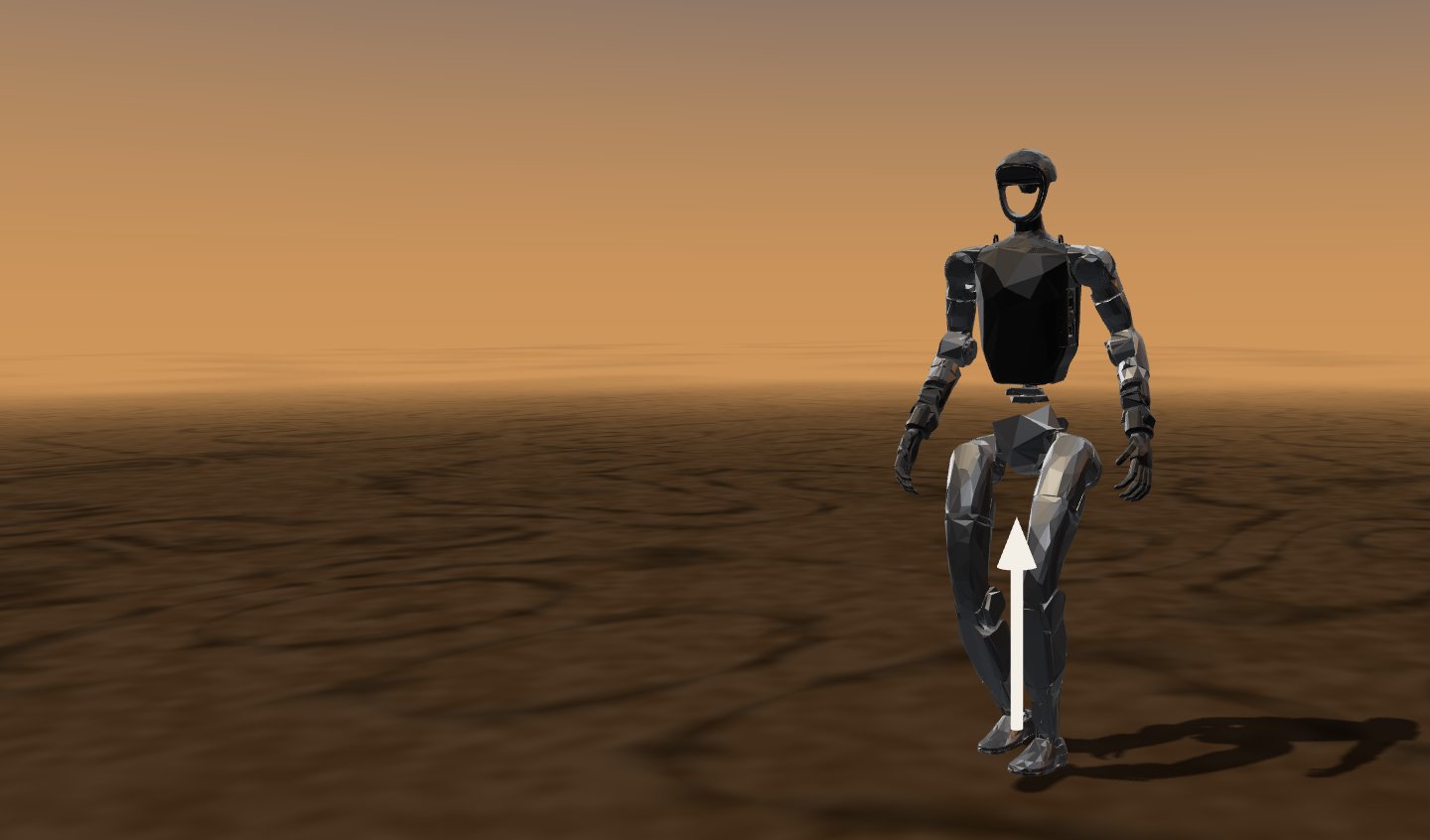
the human layer forrobot locomotion
Robots slip on terrain that people cross without incident, and we measured the required-friction gap that explains why.
recorded simulation
surface
- normal force
- 0.00BW
- shear force
- 0.00BW
1 / 4 · one terrain
How robots learn to walk today.
Most locomotion policies are trained and controlled against a single terrain, at one friction coefficient assumed in advance.
2 / 4 · recorded on ice
Change the terrain.
That assumption fails once the terrain changes: the robot either slips or stays upright by loading the surface harder to compensate.
3 / 4 · three axes
What three axes see.
We record the normal force and shear force of every stance, the full mechanical demand each step places on the terrain.
4 / 4 · the missing dataset
Humans already walk on all of it.
We measure the required friction of every stance across a range of terrains, the dataset current robot training pipelines are missing.